
By John Beaton, Fairhaven Farm, Duluth, MN
Publication
Winter 2026
After seeing people light up on farm tours we wanted to focus on fostering a deeper experience that would offer more meaningful engagement with the land. We wondered if we could share our skills as farmers and lean into our penchant for teaching to offer an educational experience.
Agritourism enterprises come in all shapes and sizes and are embedded within farming operations that raise a variety of crops and animals. Corn mazes, u-pick orchards, fiber workshops, and farm-to-table meals have all become familiar offerings across rural spaces. According to a nationwide survey conducted in 2024 by Penn State University, most farmers engaging in agritourism have several things in common. More than 50% are operations of 50 acres or less, generating between $1,000 and $99,000, with fresh fruit and vegetable production and livestock as the primary agricultural activity.
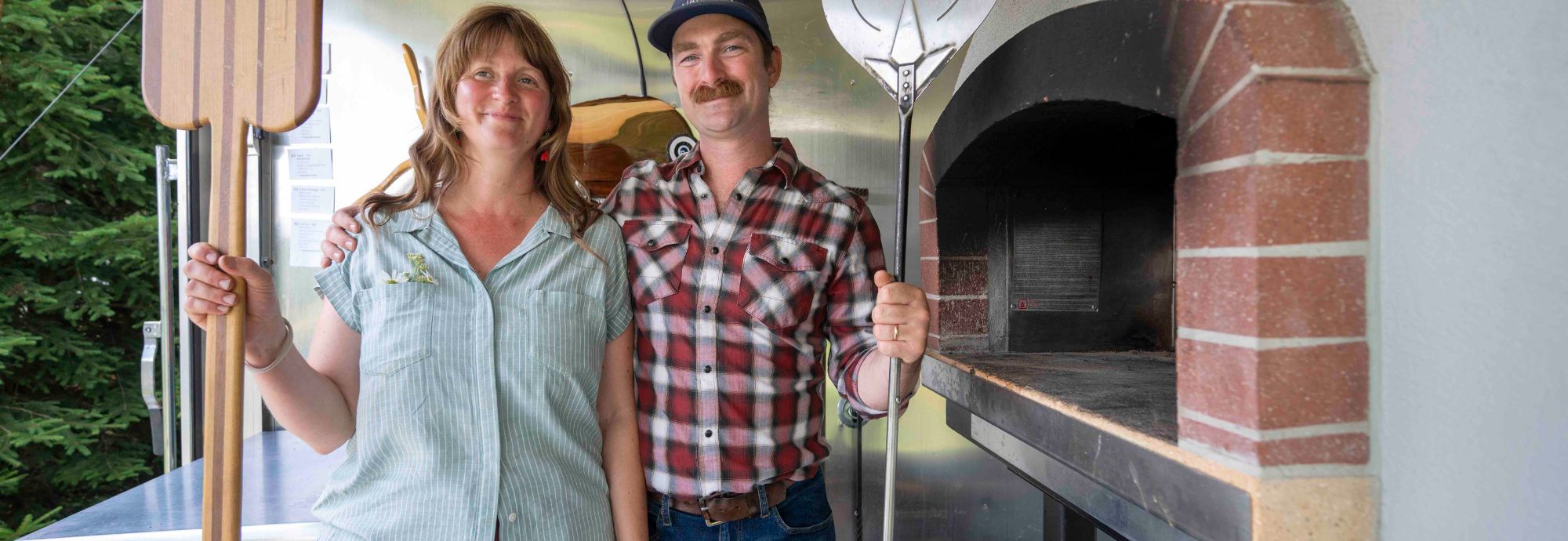
Interestingly enough, these statistics paint a pretty accurate picture of the farm my wife Emily and I run about 20 miles north of Duluth in Minnesota. We raise fresh fruits and vegetables and have a small flock of Icelandic sheep on the 27 acres that comprise Fairhaven Farm. Our agritourism enterprise, which centers around hosting weekly wood-fired pizza nights, provides a significant income stream to our farm business. When folks come to visit, they get access to our farm products, plus we feature other locally and regionally produced meats, cheeses, and other value-added products, making it a win-win for our farming neighbors.
These weekly events, held May through September, provide an opportunity to connect with visitors in a unique way. While folks wait for their pizza it is my job to give farm tours. I take people through the field space, show them what's growing, and let them taste the fruits and vegetables that are in season. The sheep are an absolute hit with kids and adults alike. While people come for the pizza and the opportunity to change their routines and see something different, this hands-on experience surprises many of them.
They can get pizza from a dozen different restaurants in our area. It’s not simply the menu item, it's the story the pizza tells that makes the experience special. The flour for our signature crust, for instance, is sourced from Natural Way Mills in Middle River Minnesota, an organic grain mill that sources its grain locally and regionally. Many people are surprised at the depth of flavor that comes from our 50% whole wheat crust. Or our red sauce, which is made from the tomatoes we grow in our high tunnel; I always get a thrill to see visitors gasp when they walk among the rows of tomato vines that tower over their heads! It’s through these stories and experiences that our customers gain an appreciation for why it’s important to support farms like ours. With the pizza on their plate, I can connect the soil health practices and care that goes into cultivating the ingredients to the tastes they are enjoying.
Beyond Pizza
After three seasons of honing our system, we wanted to expand what we were doing in order to bring in more income. The pizza night was great for attracting a lot of visitors, and we were committed to farming. We didn’t want to be an event space in the country and expand into hosting weddings or renting our venue. After seeing people light up on farm tours we wanted to focus on fostering a deeper experience that would offer more meaningful engagement with the land. We wondered if we could share our skills as farmers and lean into our penchant for teaching to offer an educational experience.
We looked at what other innovative farmers were doing for inspiration. We found two examples we really like. Knoll Farm in Vermont offers day-long or multi-day retreat space for organizations focused on positive changemaking. According to the farm’s website: “Many organizations find that the unique combination of the farm’s rich history, a caring staff, delicious communal meals, and inspiring natural settings in which to listen and speak deeply is transformative on many personal and professional levels.” We were also inspired by Jean-Martin Fortier’s program called Canopy – “an advanced certification retreat … designed to best prepare the next generation of farm advocates, consultants, and educators by equipping them with the skills needed to help others successfully manage small-scale farms.”
In both instances, farmers are using their skillsets as educators to affect personal and professional growth in a group setting. Each of these farms have tapped into more than their ability to grow food to generate income. They create or host meaningful experiences while offering access to their farm spaces to intentionally foster positive cultural change.
Growing Your Good Life
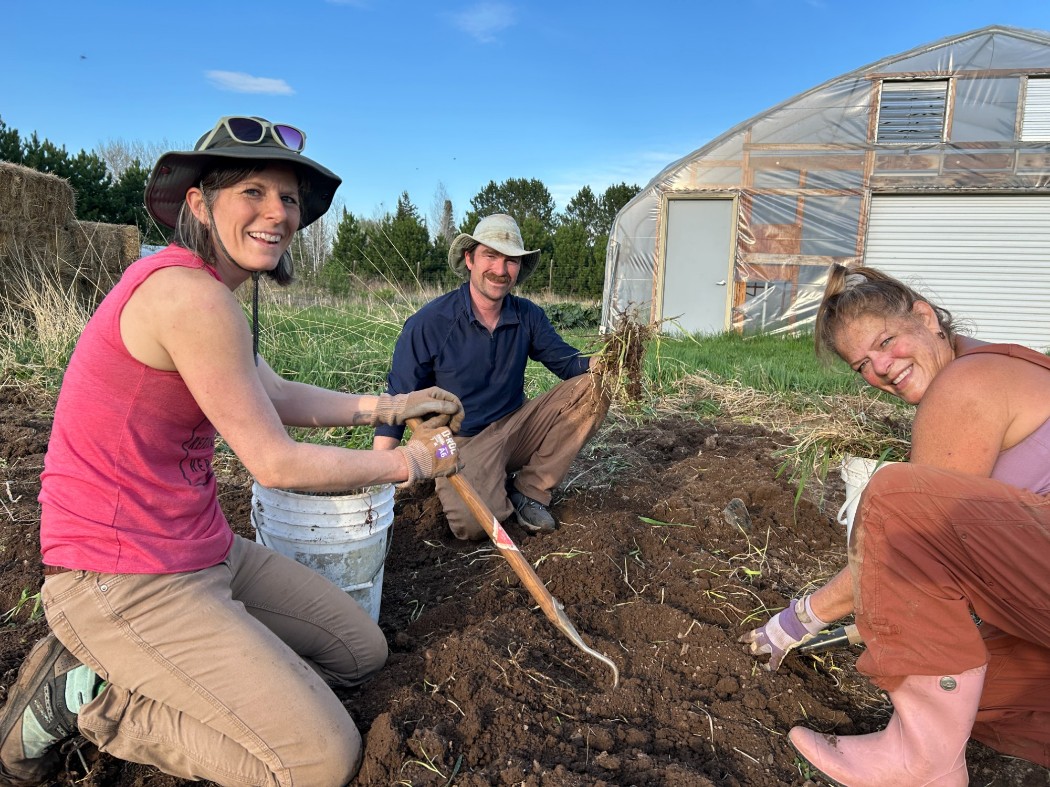
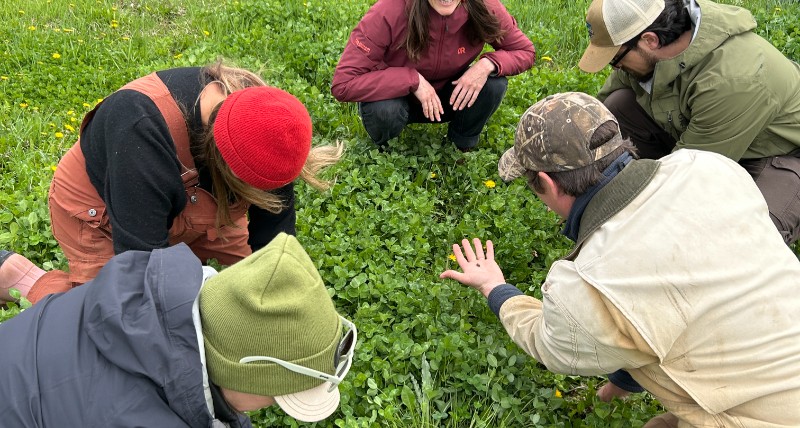
With these examples in mind, we launched our new offering in 2025, “Growing Your Good Life.” We led a cohort of nine people through a season-long immersion course that convened at the farm once a month for a full day of programming. The content of these monthly meetings was split between a classroom type setting and bringing participants into the greenhouse and out into the field to perform the tasks of the farming season. Folks got the chance to mix learning styles, share their own story with the group, and, most importantly, put their hands to work as we started seeds, planted the field, and finally reaped the harvest of our work together.
Had the course revolved solely around the practical skills of farming and the science behind soil health it may have only attracted beginning farmers or others in the agricultural sector. We wanted to include people who sensed that the farm had something to teach them, but who weren’t necessarily seeking a new vocation. Over the years, as Emily and I deepened our relationship with the plants and the soil and invested time into defining what a meaningful life looked like, we witnessed our lives transform in a powerful and positive way. While this transformation is surely possible in many contexts, we attribute much of it to being on the farm, taking part in the rhythms of the season, and integrating the lessons that living life close to the earth brings. Those of you that farm know – farming changes you. We wanted to find out if we could foster that change through our course for anyone who was open to it.
The Farm as a Metaphor
Emily and I both have experience as educators and mindfulness practitioners, as well as training in Holistic Management, all of which informed the creation of the course. Growing Your Good Life blends elements of self-stewardship and self-reflection, which helps root participants in an ethic of soil health while cultivating the life they want. The most critical aspect of the course is helping participants define their context. We ask questions such as: What are the most important values that you hold? What is the quality of life that you desire? How and what do you want your life to look like? How does the natural world and growing food intersect with the context you desire?
Participants contemplate these questions and write them down in a custom workbook that we created to guide folks along the way. The formula we defined, simply put, goes something like this: identify your values, define the context that best mirrors a life lived in alignment with those values, and then create a habit of monitoring to ensure that the decisions you make are continually leading in that direction.
The course is centered around the metaphor of the growing season. The same way we learn to care for the soil to receive a good crop is how we can learn about ourselves to grow into our full potential. We define what our landscape needs to look like and how the ecosystem must function to produce a reliable crop year after year. We cultivate a deep understanding of the interdependence that lies at the heart of farming for soil health, and we constantly observe the landscape for signs of function or dysfunction so that we may correct or continue our management decisions.
The positive effect of this work is enhanced by being in a cohort of supportive individuals who are all committed to growing their own good life. We were successful in attracting a wide range of participants, from college students, newly married couples, young professionals, and a recently retired neighbor. This intergenerational mix lent our inaugural course a diverse mix of perspectives and values.
Agritourism's Next Chapter
Just as every individual farm reflects the farmers’ skills and preferences, our course is no exception. We created Growing Your Good life to intentionally connect with a small group in an interpersonal exchange that blends elements of spirituality, psychology, and soil health. Perhaps, this type of offering is relatively rare, but there are others out there who are pushing the boundaries of agritourism, and there are many people looking for a deeper connection to the land.
All farmers play an important role as land stewards and as agents of cultural change, but for those that open their farms to the public, this role is even more pronounced. At the heart of what we do as farmers lies altruistic motivation – caring for the environment, community, and our families. There are few individuals better suited to help ground communities in an ethos of love, respect, and stewardship than farmers.