
By Marbleseed
Publication
Winter 2026
The actual mechanical processing of flax on an industrial scale requires inputs but the agricultural side doesn't require irrigation or pesticides. The flax plant hasn’t become dependent on all those inputs that some of our other crops have.
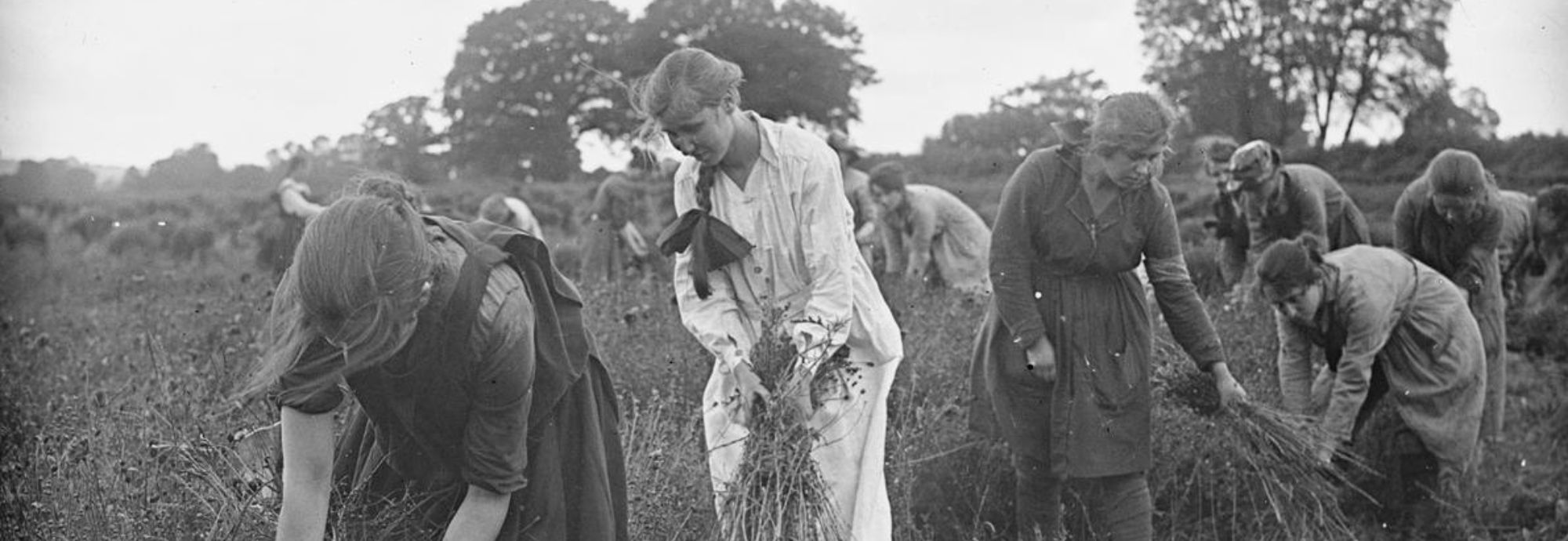
Flax is making a comeback. The plant, which was brought to North America by European immigrants as early as the 1600s, was widely grown as a source of fiber, oil, and food. Before the rise of petroleum-based products, linseed oil was the most common wood-finishing varnish. It was also used to make linoleum and as a primary ingredient in paints. Its fiber was processed into linen, a soft and durable material that eventually gave way in popularity to cotton and synthetic fibers.
Today, 75% of the world’s flax is grown in northern France, an area known for its linen. A small but growing number of textile artists and designers are dedicated to reviving flax production in the U.S. This movement began in California, when fiber artist Rebecca Burgess challenged herself to create her wardrobe entirely from materials grown and fabricated within a 150-mile radius of her home. The experiment made clear there were many individuals and small businesses working in the fiber sector but there was no infrastructure to bring them together.
A Network of Farmers, Artisans, and Mills
Burgess introduced the concept of a “fibershed” and started a nonprofit of that same name. More than a decade after it was formed, Fibershed has more than 70 affiliates across the U.S. and beyond, joining farmers, ranchers, designers, sewers, weavers, knitters, felters, spinners, mill owners, and natural dyers, who are deeply connected to and knowledgeable about their local landscapes.
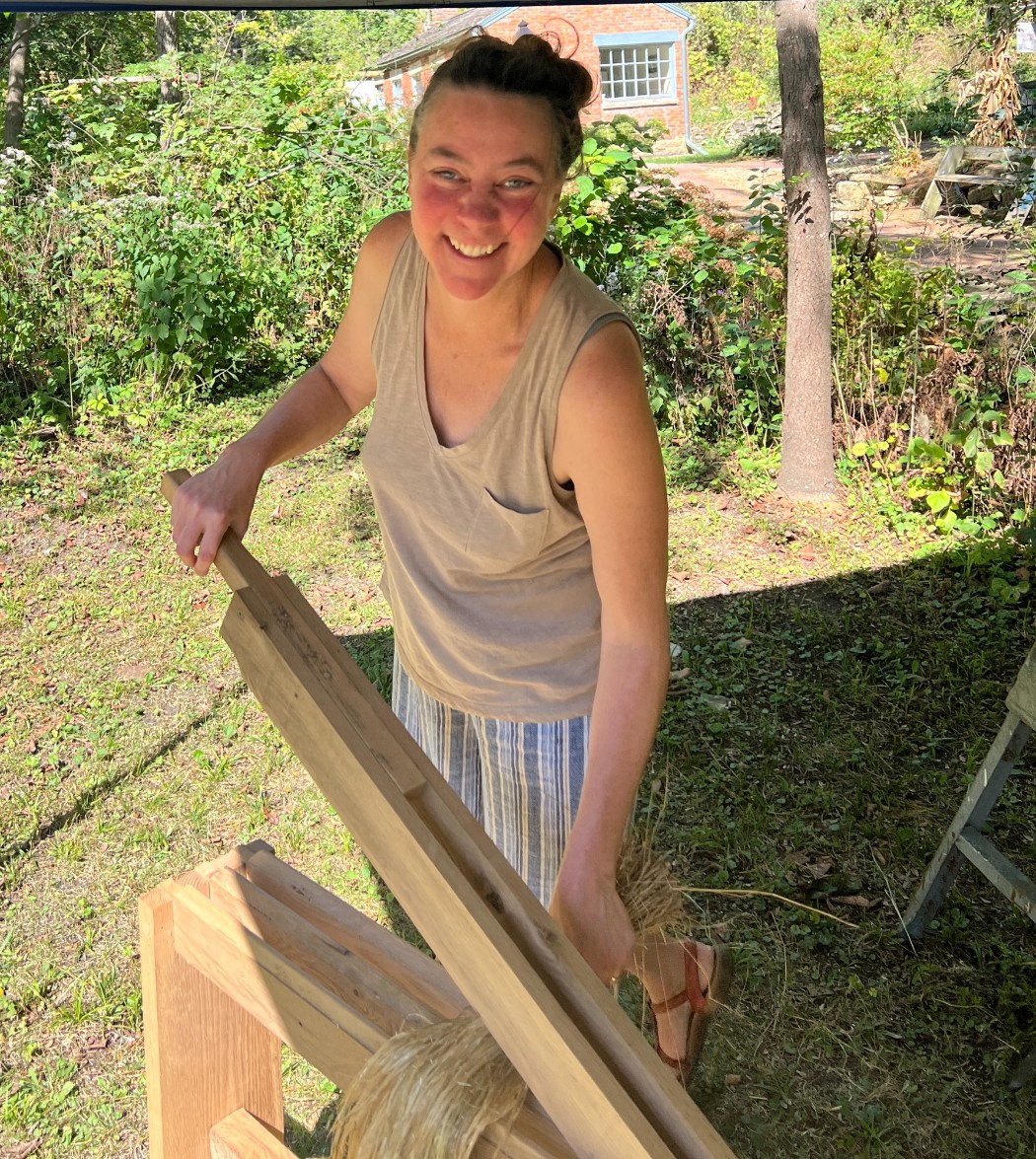
Leslie Schroeder, a Madison-based advocate for locally grown and sewn textiles, believes flax is key to a Midwestern fibershed. She is part of a community of artisans, farmers, and researchers working to revive a flax production and processing network in Wisconsin.
Schroeder is presenting at Marbleseed’s Organic Farming Conference in February along with John Hendrickson from the UW-Madison in the Center for Integrated Agricultural Systems. As a preview to their session, “Fiber & Textile Potential in Agriculture: Flax for linen (and more!) in the Midwest,” Tay Fatke, Marbleseed’s Farmer Education Manager, spoke with Schroeder.
Tay (TF): What brought you to fibersheds in general and flax in particular?
Leslie (LS): I have been a weaver and knitter my whole life – I still have my Fisher Price loom! After I had children, I became more interested in sewing our clothes, which led me to foraging for wild cordage.
We’re so disconnected from where our clothes come from—who grew the materials, who sewed them. Even the fact that clothes come from plants is lost on us. When I learned about the fibershed movement it reminded me of the local food movement that encourages us to eat seasonally and build a relationship with the person who is growing our food.
We can’t grow cotton in the Midwest, but we can grow flax. There are other fibers that grow here – hemp, stinging nettles, and milkweed – but they’re rougher. Linen, however, is a soft, high-quality material that’s been used to make bed sheets and underclothes because it’s soft against the skin.
Locking in a Five-Year Rotation
TF: What are the benefits of flax as far as inputs or resource concerns, especially compared to cotton?
LS: Cotton requires quite a bit of water and chemicals. It also has a complicated, difficult history – though I’m thrilled to share there are African American farmers and designers in the south who are reclaiming their relationship to cotton.
The actual mechanical processing of flax on an industrial scale requires inputs but the agricultural side doesn't require irrigation or pesticides. The flax plant hasn’t become dependent on all those inputs that some of our other crops have.
Flax grows relatively quickly and is a pollinator friendly flowering plant. It’s a mycorrhizal super host that supports and boosts beneficial fungi in the soil. It works well in a lot of rotations. When I visited Normandy, I met with farmers who have a lock on their five-year crop rotation. They never deviate from it, and they have a path to sales for each of the crops. For flax to be successful here, we need to figure out the right rotation. It’s something I’m working on with the University of Wisconsin Extension.
TF: How does flax for fiber and flax for seed oil production differ in terms of varieties and management?
LS: They’re the same plant but different varieties. The fiber varieties have been selected to be very tall and not branchy, while the oil seed varieties have been selected to be short and branchy and set heavy seed. The fiber varieties are harvested earlier—younger fibers are finer and softer. You want to let more time pass for the seed to set on the other variety, which degrades the quality of the fiber so that it’s not garment grade.
I’m part of a supply chain feasibility study that’s looking at secondary fiber markets for the stems of the oil seed. There are many worthwhile things it can be used for like carpet backing and erosion control mats. In Europe, there is a lot of research and development for bioplastic composites, something that hasn’t hit its stride yet in North America. But I think there’s real possibility for Wisconsin to play a role in developing flax bioplastics for consumer products, which would create two uses or double cropping.

[Section Title]
Lorem ipsum dolor sit amet, consectetur adipiscing elit, sed do eiusmod tempor incididunt ut labore et dolore magna aliqua.