

Food Safety Considerations for Wash Pack Sheds
By Annalisa Hultberg, University of Minnesota Extension
Publication
Summer 2026
Ri venest eveniendit as quisit fugit quiam, te pore por aceaque es seris re quistotatet qui.
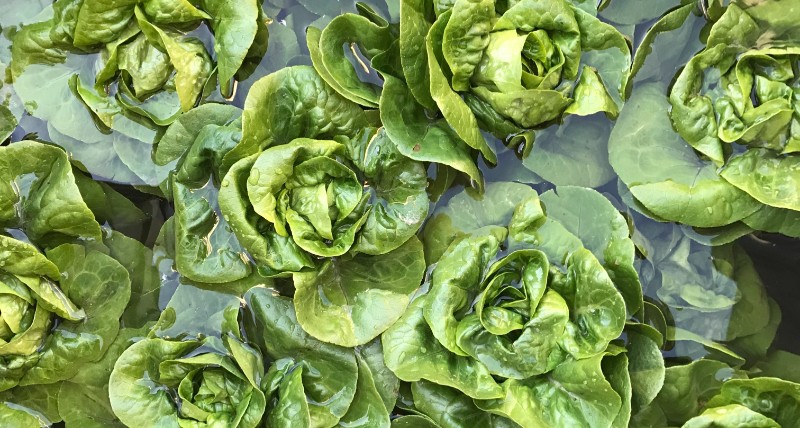
Packing and wash sheds come in all shapes and sizes, as does the equipment that comprise them. Many beginning and small farmers find this aspect of building an operation intimidating as it means understanding food safety.
It’s common for small-scale fruit and vegetable growers to repurpose used equipment for their washing and packing areas or build their own. Both retrofitting and DIY are good ways to save money and customize equipment that suits your needs and space.
In this article I will outline some low-cost equipment options for spray tables, wash tanks, barrel washers, and handwashing stations. Before we dive into specific equipment, it is important to consider the core principles of food safety that apply to all equipment that comes in contact with food.
Hygienic design principles
All postharvest equipment should be cleanable so that you can fully remove biofilms. This slimy layer is a complex community of microorganisms, such as bacteria, fungi, and algae, that builds up where water is regularly present. According to the National Institutes of Health, “Biofilms are a critical food safety hazard because they harbor foodborne pathogens, accelerate cross-contamination, and are highly resistant to standard cleaning routines and sanitizers.”
If you are using equipment for postharvest that wasn’t intended to be food contact surfaces, it’s even more crucial to choose wisely. For example, we have seen hub caps, 50-gallon steel drums cut in half, bicycle rims, old bathtubs, and door frames put together into washing equipment. These materials are not ideal for a food contact environment, since they can rust, leach chemicals, and can be hard to clean. While it can be tempting to save money by reusing materials you have on hand when building postharvest equipment, it is important to consider the food safety implications.
Here are some key principles to keep in mind when building, buying, or repurposing equipment that will be in contact with fruits and vegetables.*
• Smooth and cleanable surfaces – Walls, floors, and all equipment pieces should be smooth, non-porous, and easy to clean, such as stainless steel, plastic, or concrete with epoxy coating. Think about the smooth surfaces in a kitchen or bathroom. If surfaces are bumpy or porous, like wood, it will be difficult to remove accumulated plant debris and mud.
• No collection points – Avoid cracks, crevices, and bumpy welds. These points allow water and debris to gather and can be difficult or impossible to fully clean. You might not be able to see the bacteria that is breeding in the small crevices, but trust that it’s there!
• Visible and reachable surfaces – If you can’t see it or reach it, you can’t clean it. It can be difficult to reach all parts of some equipment, such as long barrel washers. You might need to buy a long-handled scrub brush for this use. Try to purchase or build equipment where you can access the parts so that you can clean it.
• Material compatibility – The material and surfaces should be non-toxic and non-rusty. They should be non-reactive to cleaners and sanitizers that can corrode or leach chemicals from the materials.
• Proper drainage and water management – Do your best to avoid standing water. This might mean properly graded floors and water diversion pipes or hosing so that water doesn’t pool on the ground. After cleaning your produce and the pack/wash area, squeegee or sweep away water so that it’s not left standing. If you are washing on grass, pipe water away so that it is not pooling at your feet.
• Preventing cross-contamination – It is important to maintain separate dirty and clean areas in the packing area. This means having a good workflow that allows dirty produce to enter in one area and leave clean from another.
Low-cost equipment
Here are some low-cost post-harvest equipment ideas that are effective and food safe.
Spray tables - Spray tables are very helpful for cleaning off bunched or heavily soiled crops. Often, they are made from a frame (built from wood or metal), and a top that allows dirty water to run off and through the table as the produce is sprayed. Build them near a hose and water source. Attach a hook on the side to hang the hose nozzle so that it is not on the ground.
Remember that the materials should be food safe. Do not use a rusted screen or anything that will rust if consistently wet, including galvanized metal. It is okay if the frames are made of wood since the frame itself will not touch the produce, though the wood will rot relatively soon due to the wet conditions.
Plastic greenhouse bench tops, such as “Dura-Bench” with one-inch diameter holes, are excellent options as they are washable and durable. There are also plastic grid top tables that are easy to assemble and available from online retailers such as Greehousemegastore.com and WebstaurantStore.com.
Wash tanks - Wash tanks are used to dunk produce like salad mix. They are also used for hydrocooling crops like bunched greens that benefit greatly from removal of field heat. You can find good prices on stainless steel tanks or sinks from restaurant auctions or online resale sites like Facebook Marketplace.
New, heavy-duty livestock water tanks made of structural foam are another cost-effective option. For example, the Rubbermaid 100-gallon structural foam tank currently sells for about $130 at Tractor Supply and will last for many years. It has a larger diameter opening, which allows for water to drain much more quickly than a traditional 5/8-inch valve.
Avoid galvanized metal or other non-stainless metal tanks, old bathtubs, or other vessels that were not made for food contact. These materials can leach out chemicals and are often chipped or worn, making them difficult to fully clean.
Barrel or root washers - Washing root vegetables can be a time-consuming and dirty task. A barrel washer can make the process much more efficient, gently spinning the produce while water and dirt fall through the cracks.
You can purchase a new or used barrel washer from many sources, including other farms. One of the first small-scale barrel washers was designed by Dick de Graff, who owns and operates an organic farm in New York state. He sells fully built washers and kits from his farm site: https://www.grindstonefarm.com/root-crop-washers. There are similar, open source plans online, such this one from Farm Hack: https://farmhack.org/tools/root-washer.
Another DIY route is made using a new concrete mixer, available from Harbor Freight for under $350. The concrete mixer becomes the washing vessel, with a nozzle spraying water over them while they turn. You will need to drill holes for water to escape, and PVC or other ways to lift the produce as the barrel turns.
All root washer drums need to be sanitized after use. Also remember to shield the motor from water spray.
Handwashing station - Just as you would when working in a restaurant kitchen, it’s important to wash your hands anytime you’ll be in contact with food. Having a clean and convenient handwashing station makes it easier to adhere to this rule.
Stock the area with potable (drinkable) water, soap, paper towels, and a garbage can. The sink can be plumbed, or you can use a simple seven-gallon tank on a table with a continuous flow valve and a five-gallon bucket to catch the wastewater.
Another option is a fish washing table, available from retailers like Home Depot. They are often not stocked in stores but can be purchased for delivery to the store or your home. These can easily be fashioned into handwashing stations. Just plumb it with a hose and place a bucket below the drain to catch the water.
Finally, don’t forget to sanitize all surfaces that come into contact with food before and after use. This is even more crucial if your pack/wash shed is open to the elements – as many are – allowing critters to come in and potentially contaminate surfaces. Keeping your tools and equipment clean also minimizes the risk of the spread of plant pathogens that can cause disease on your farm.