
Growing Community, Deepening Cultural Roots
By Marbleseed
Publication
Fall 2026
“Essentially, we’ve been doing this [farming] for thousands of years – long before ‘organic’ and all of that.” - Khalid Elhassan, co-founder of the Sudanese Farming Group
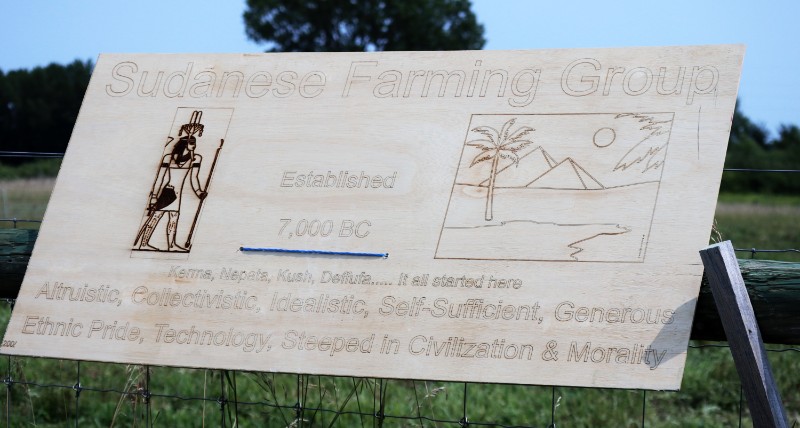
Intergenerational learning. Collaborating across continents. Cross-global sharing. Cultural pride. These are all central tenets of the Sudanese Farming Group. The group (SFG for short) was formed in 2022 by a small group of Sudanese immigrants, all of whom were non-farmers. They saw farming as a chance to preserve and recover cultural practices through food. Today, working on two different farms, up to 40 families are involved in planting, harvesting, and sharing food together.
One of the group’s founders, Khalid Elhassan, a retired engineer, says of the project. “It's very important to us – the ethnic culture and the traditions. When people migrate to a different culture, we found there's a lot of things that get lost.”
Coming home to the soil
Most members of the group are one to two generations removed from farming. Traditionally, many Sudanese have relied on subsistence farming for a large amount of their food. When a civil war broke out in the late 1980s, many Sudanese were pushed into refugee camps. They later resettled in other countries, including across the U.S. In Minnesota, according to the U.S. Census Bureau, there are roughly 3,500 to 3,600 residents of Sudanese ancestry, the majority in urban areas that are cut off from their agrarian roots.
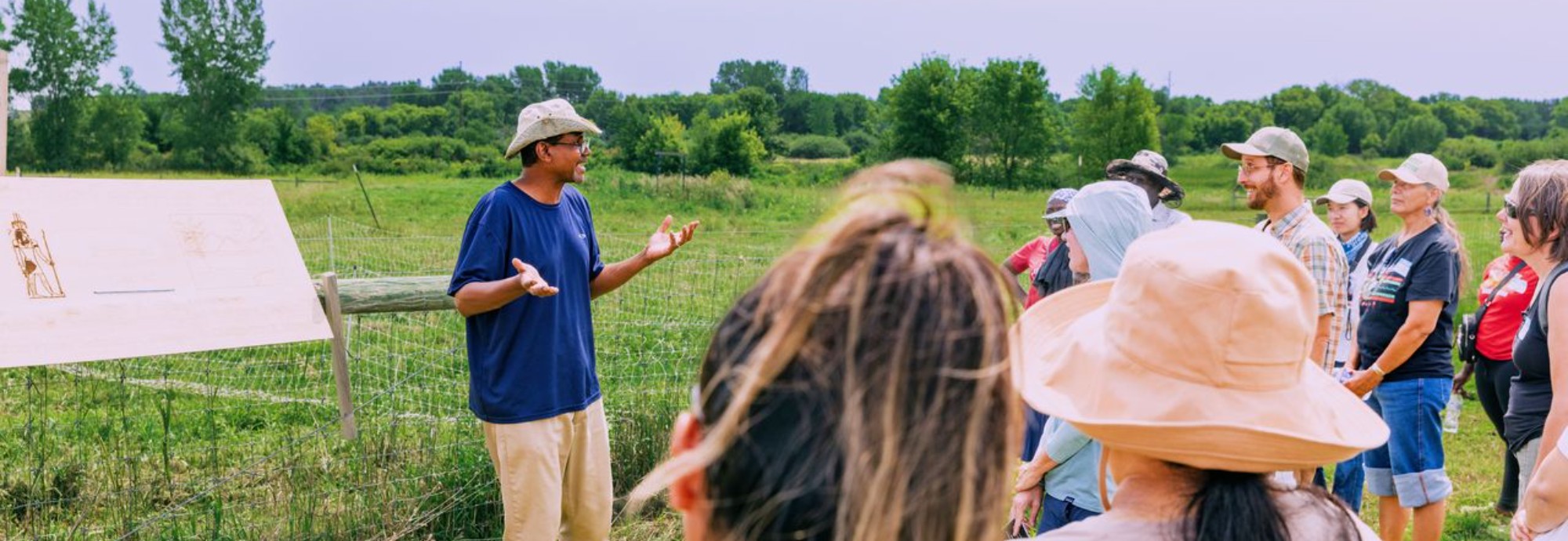
The chance to grow food and have their hands in the soil is more a homecoming for members of SFG than learning new skills. During a recent Marbleseed field day at Sharing Our Roots – a farm in Northfield, MN, that provides land access, tools, and skill building for emerging and immigrant farmers – Elhassan gave an overview of their farming operation.
He emphasized the rich agrarian culture and advanced technology practiced by the civilizations that emerged from the area now called Sudan. Located directly south of today’s Egypt, the Blue Nile and White Nile rivers meet in Sudan's capital city, Khartoum, to form the main Nile River. It was home to some of the most advanced early human architecture and metallurgy.
“We are the descendants of Kush, Kerma, and Nubian civilizations,” Elhassan said. “Essentially, we’ve been doing this [farming] for thousands of years – long before ‘organic’ and all of that.”
Group ownership of successes and failures
The food the SFG is growing is familiar to the families who are involved. They have two farm locations. At a half-acre plot in New Hope, MN, that is part of The Food Group’s incubator farm, they grow molokhia (sometimes called Egyptian spinach), okra, tomatoes, and Armenian cucumbers. At Sharing Our Roots, they have a herd of sheep and a flock of chickens.
“It’s not just what the crops are that is culturally significant,” Elhassan told the group assembled at the field day, “but how they’re grown, processed, and cooked.” A collective system is key to the SFG’s goals, ensuring that members share time together and mutually expand their understanding and respect for the farming process. He says they operate with a very horizontal organizational model. For example, no matter the amount of work they do, or how many times they show up, SFG families equally receive produce and meat.
Standing in front of a small herd of sheep, Elhassan said, “The herd that you see here is owned by many, many families. The idea is to make accessible the idea of farm ownership.” Although Sharing Our Roots in Northfield is nearly an hour away from where many SFG members live in the Twin Cities, at least one person is there every day to care for the animals. Because the work is divided between families, each family only must take a turn once every few weeks.
They are practicing rotational grazing with the sheep, which were joined this growing season by a small experimental flock of about a half a dozen chickens or so. Elhassan says the two animal groups have a symbiotic relationship; the chicken eat the sheep’s dung, which has a larvae in it that produces a fly that is detrimental to the sheep.
He admits that they are learning as they go, but even failures bring them closer together. This year, they lost a couple of sheep for the first time due to a worm infection. However, they turned it into a learning opportunity by taking one of the sick animals for a necropsy at the University of Minnesota’s College of Veterinary Medicine and connecting with the university’s extension services for community education.
Embracing life cycles
Core to the SFG’s goals is the inclusion of women, the elderly, and youth. Older people too often suffer from loneliness, and the intergenerational planting, harvesting, and shared meals keep them involved in community life. Younger people are more apt to be unfamiliar with or disinterested in their cultural heritage. Bringing them all together over a shared activity – one that is about life cycles – strengthens community bonds.
“'Oh, this is brutal. I can't deal with this.’ And what we say is if you want to eat meat, then you need to know where it's coming from.”
Embracing life cycles
Core to the SFG’s goals is the inclusion of women, the elderly, and youth. Older people too often suffer from loneliness, and the intergenerational planting, harvesting, and shared meals keep them involved in community life. Younger people are more apt to be unfamiliar with or disinterested in their cultural heritage. Bringing them all together over a shared activity – one that is about life cycles – strengthens community bonds.
He described an activity that is of special importance to cultural learning and respect that’s at the heart of SFG. “One of the things that we're focusing on is butchering. A lot of kids are growing up in the city, and they see this and think, ‘Oh, this is brutal. I can't deal with this.’ And what we say is if you want to eat meat, then you need to know where it's coming from.”
They have butchered sheep together several times in what Elhassan calls “a very controlled manner.” Since all members of the current group are Muslim, they use halal practices. Fundamental to this is that an animal should experience minimal suffering, be well-fed and watered just prior to its death, and not be butchered in sight of other animals to avoid causing distress. A specific prayer accompanies the slaughter. The whole process, he said, “instills in young people a lot of values and a lot of responsibility.”
Involving kids through tech
Another way the SFG has engaged youth is by encouraging them to apply skills beyond agriculture to the farm. Many of the younger members of SFG have interest in technology, which they’ve used to problem solve issues that arise, such as lazy chickens that don’t come into the coop at the end of the day.
They took an off-the-shelf chicken coop door that can be programmed to open at specific times each day and hooked it to a Wi-Fi camera that faces the coop. They are working on hacking the original system so that they can remotely open and close the door to let a late chicken come into the coop after sunset.
They are also working on developing a small farm rover that would have a Wi-Fi camera attached to it. It would be remotely driven around the farm to check on the sheep and the chicken and alert the group if someone needs to come down to the farm to attend to any urgent matter.
Instilling resilience
Elhassan and other SFG elders insisted the students work on the rover project collaboratively with students in Africa. The younger Minnesotans set up a weekly design meeting with students from three universities in Africa. Due to the time difference, the U.S. group would log in to discover that the African part of the team had solved a big part of a design problem overnight.
The experience knocked some hubris out of the kids who have become Americanized, as they learned about the tenacity that many of their collaborators have in the face of seemingly insurmountable obstacles. Elhassan described a girl on the African design team who walked two hours to the nearest village to source power from a generator that runs for two hours at a hospital.
“She sits there to charge her laptop, so that she can return home and log into the Zoom meeting with the design team.” The Minnesota group was incredulous that she’d gone to such lengths, but she only laughed and told them it was quite normal.
This kind of determination and resilience, Elhassan hopes, is contagious. Eventually, the founders of SFG want today’s youth to take the reins of the organization. As they develop more connections to the land and animals, the rhythm of farming, and the growing SFG community, Elhassan believes they’ll gladly accept this responsibility. “Once they build that emotion and attachment,” Elhassan says, “this is something that they will not forget for years and years.”