
Perennial Buffer Power: Creating small, wild, and humming landscapes
By Ben Wojahn
Publication
Fall 2026
NRCS has identified several types of buffers, including riparian forest, herbaceous/grass, contour strips, and saturated. Which is right for your land?
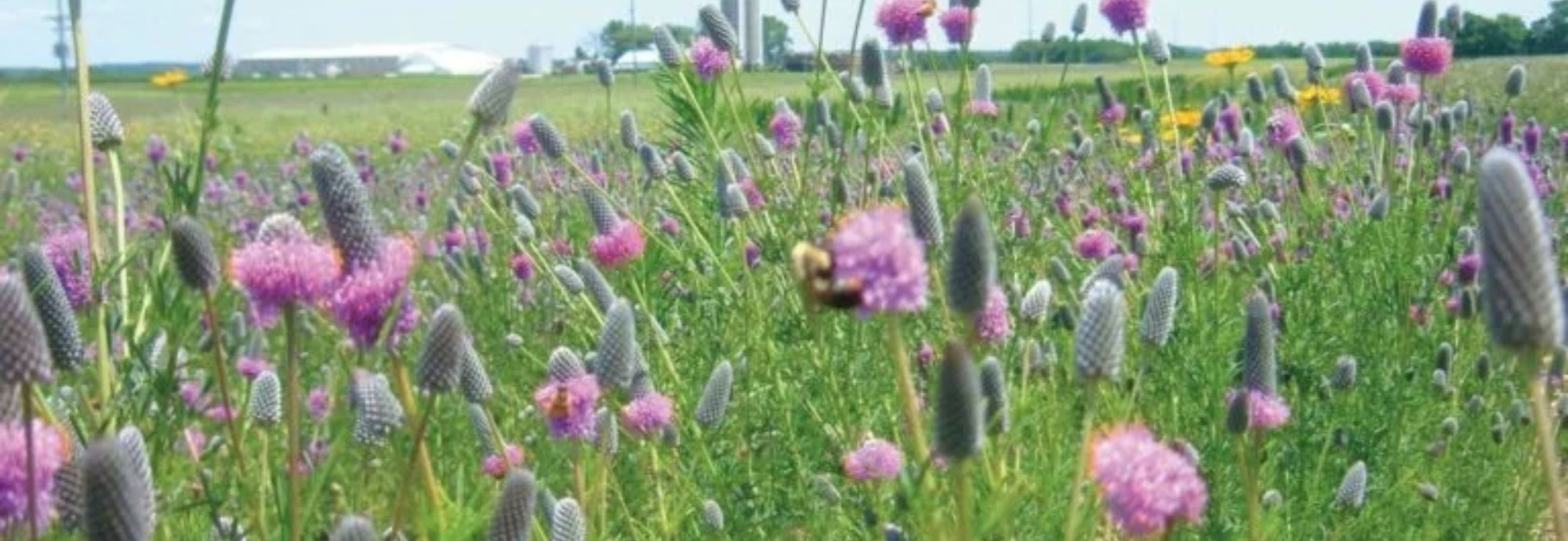
In the early morning as dew beads on the leaves, a stand of wild bergamot – monarda – is just catching the first light. Its shaggy lavender blooms tremble under the weight of visiting pollinators. A hummingbird moth hovers over one blossom after another, wings a blur, its long proboscis unfurling like an extended party favor into each flower. Nearby, a rough-and-tumble bumble bee muscles its way headfirst into a spike of dotted mint, dusted yellow with pollen before it even notices.
This is what a well-built buffer looks like when nobody's watching – not a conservation practice number on a contract, but a small, working piece of wild, humming land.
If your land has a field edge, an area with too much erosion, or a stretch of stream that mostly just grows invasives and regret, you are sitting on an opportunity. That strip could become a perennial buffer – a planted band of trees, shrubs, prairie species, and other woody plants that stabilize soil, filter run off, and feed pollinators. If you plan it right, it will provide a harvest of hazelnuts, elderberries, or timber for decades to come. Best of all, you may not have to pay for it alone.
What exactly is a “buffer,” and why would I want one?
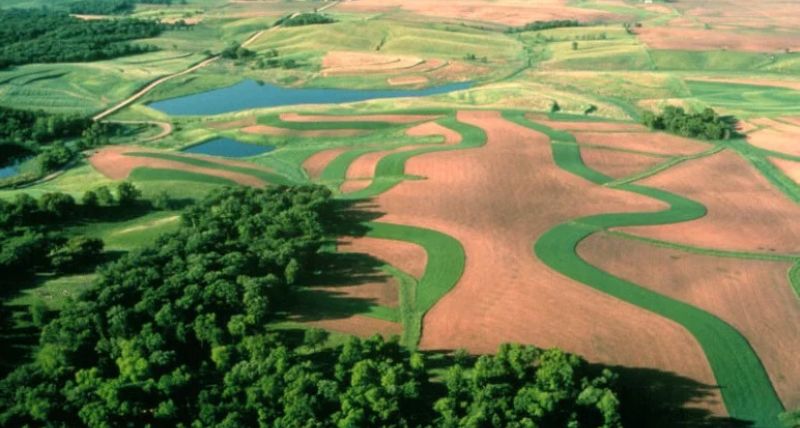
A buffer, in conservation-speak, is a planted strip of perennial vegetation positioned to intercept something – usually water, wind, sediment, or nutrients – before it becomes a problem somewhere else. The USDA Natural Resources Conservation Service (NRCS) has several practice standards, and it's worth knowing the names and their accompanying code numbers because they'll come up when you apply for assistance:
• Riparian Forest Buffer (Code 391): Trees and shrubs along a stream, river, or lake to shade the water, trap sediment and nutrients, and stabilize banks.
• Windbreak/Shelterbelt Establishment (Code 380): Rows of trees and shrubs to block wind, protect livestock, buildings, or crops, and reduce snow drift across your driveway (a genuinely underrated benefit in Wisconsin in January).
• Filter Strip (Code 393): Herbaceous or mixed vegetation that filters runoff from a field before it reaches a waterway; it’s often paired with a forested buffer.
• Tree/Shrub Establishment (Code 612): The umbrella standard governing how any of these plantings are designed, spaced, and installed, from site prep through survival criteria.
• Tree/Shrub Site Preparation (Code 490): The most common practice to assist in buffer and tree planting establishment – getting rid of the sod, weeds, and turf competition before anything goes in the ground.
• Upland Wildlife Habitat Management (Code 645): Often layered onto a buffer to specifically boost pollinator and wildlife value.
Don’t worry – no need to memorize the numbers. Your local NRCS or county Land & Water Conservation Department staff can help guide the process. Marbleseed also offers this service! Not only do these specialists stay on top of changing funding or the priority of practices, but they can also help you identify your conservation and production goals and locate the right programs to meet them.
Can a buffer pay me back?
Yes – with patience. The trick is choosing species that do double duty – conservation function plus a harvestable product. This is sometimes called an “agroforestry buffer” or “multifunctional buffer,” and it's exactly the kind of thing a lot of producers are doing well. Instead of planting a monoculture, you plant a mix that includes food, forage, floral, or wood products for you (or a future buyer) alongside the erosion control and habitat value the cost-share program is paying for. In Wisconsin, the NRCS Forestry Technical Note and the state's Tree/Shrub Establishment guidance (Code 612) exist precisely to guide you with a multitude of native species.
NRCS has identified several types of buffers, including riparian forest, herbaceous/grass, contour strips, and saturated. Which is right for your land?
Think of a riparian buffer as having rings, working outward from the water – a streamside zone that tolerates wet feet, a middle zone of taller trees and shrubs, and an outer filter zone of grasses or forbs. Using Soils Maps, such as the free GIS tool Web Soil Survey, will help you identify the plant suitability for your site.
Is your sight wet, or high and dry? Some species have more adaptability than others. Is your goal marketability for floriculture, or to produce pies, jams, and jelly? Do you have the goal of long-term timber, syrup, or nuts? Your production goals, along with your site's suitability, should all go into the planning process for a harvestable buffer.
A buffer planted purely for erosion control is a missed opportunity. Add a diverse bloom sequence – willow and serviceberry in early spring; dogwood, aronia, and viburnum in early summer; elderberry, St. John's wort, monarda, and dotted mint through midsummer; and native forbs into late season – and you've built something that functions almost like a pollinator relay race, with blooms handing off to each other from April through September.
Continuous blooms matter enormously for native bees. It will also boost pollination on adjacent crops like apples, cranberries, or squash, so the “habitat” line item on your conservation plan is quietly also an “agricultural input” line item. This is true for your pollination, as well as creating your own insectary for natural pest predators on an organic farm.
Where to begin?
Programs can be challenging, and their timelines do not always match up with your expectations. No matter who you’re working with, try to remember the three Ps: patience, politeness, and persistence. After all, you win more pollinators with honey!
Contact your county's NRCS field office or County Land and Water Conservation Department (Soil and Water Conservation Districts outside of Wisconsin). Marbleseed may be able to assist you with planning and navigating through these programs. Tell the conservationist what you're picturing, e.g, a stream buffer, a windbreak, a pollinator-friendly hedgerow, and they'll tell you which programs and practice standards fit. These professionals know their stuff – heed their advice!
The next step is a site visit and assessment. A conservationist (possibly someone very much like the person writing this article) will walk the site with you, check soils via the Web Soil Survey, note drainage class, slope, and existing vegetation, and talk through your goals. Do you want nut production? Timber in 40 years? Maximum pollinator value? A mix?
They will develop a conservation plan that translates your goals into an actual design – buffer width, species mix, spacing, and which NRCS practice codes apply. This plan is also what makes your project eligible for cost-share funding.
Cost-sharing application
You’re now ready to apply for cost sharing. EQIP and CSP applications are typically ranked and funded in batches, so timing matters. Ask about your state's application cutoff or ranking dates; these are often in the fall or winter for the following growing season.
Don't assume funding is automatic. Competitive ranking rewards plans that address clear resource concerns, such as water quality, erosion, and wildlife habitat. A well-articulated plan will greatly benefit your odds. Also ask about “stacking” multiple practices. Never chase the money, but stacking complimentary practices, each of which helps you meet your goals, can increase your chances of being funded.
When do you see money? Cost-share programs typically reimburse a portion of your expenses once they are installed and certified by NRCS. Ask the funder what documentation they will expect for full reimbursement.
Suppress, plant, maintain!
Following approval, you begin the unsexy but critical phase of suppressing existing sod and weeds. Sometimes this occurs a full growing season before planting, so your seedlings aren't fighting established grass roots for water. Skipping this step is the single most common reason novice buffer plantings fail.
For organic producers, this is more challenging and critical. You may want to use a combination of “smother” cover crops or organic mulch. Sometimes a sod cutter is your best tool. Regardless of your organic site prep method, you will likely need more time than someone using herbicide on a conventional field. Since this might take more than one growing season, be sure you understand the site prep timing before you order plants.
When you’re ready to plant stock, be aware that bare-root seedlings are typically ordered months ahead through state nursery programs or NRCS-approved vendors. Wisconsin DNR's nursery program is a common and economical source. Order early – popular species often sell out. Most Wisconsin plantings go in as bare-root stock in April or May, while the ground is workable and before leaf-out stresses the seedlings. Bring patience, a dibble bar or planting shovel, and reasonable expectations about your own back the next morning.
Be ready to protect and maintain your plants. Tree “tube” shelters or fencing to deter deer, rabbits, and other critters is generally non-negotiable if you want your buffer to thrive. Plantskydd, an organic approved OMRI listed spray, has demonstrated great effectiveness in deterring herbivory. Many buffers, especially riparian ones, come with a maintenance expectation (often a decade or longer) to keep them functioning. This includes replacing dead stock, controlling invasive competition, and harvesting when and where possible.
Planting a legacy
Buffers are a slow-food version of land management. Nobody is getting rich off a row of bur oak in year two. But give it a few seasons and walk out to that diverse buffer again on a dewy morning in July. The mist is just lifting off the grass. A hummingbird moth is working its way down a stand of monarda . . .
The rewards of this buffer go beyond erosion protection, water retention, and providing a cushion between you and a neighbor. The beauty, joy, and extra life on your farm works the best way conservation always does – as a legacy to the production goals, quality of life, and ethos that brought you to organic farming in the first place.
Ben Wojahn, Marbleseed’s Organic and Small Farm Conservation Specialist, is available to assist organic, transitioning, and regenerative farmers with conservation and nutrient management planning. He can also assist you in working through NRCS and other cost-share programs. You can reach out to him at ben.wojahn@marbleseed.org.