
Veteran or Farmer or Both?
Published: Nov 2026
By: Joseph Ricker
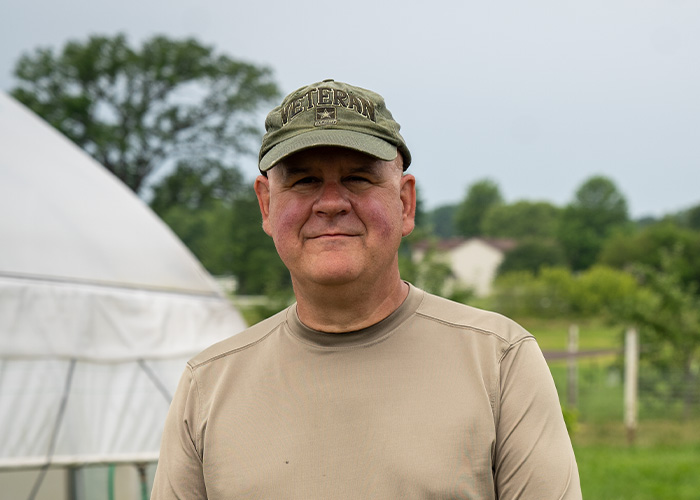
According to the USDA, approximately 15% of all U.S. farms include at least one producer with military experience. Many people leave military service in need of a similar structure and ways to apply the skills they honed during their service. In Hancock County, IN, U.S. Army Colonel Joe Ricker founded At Ease Orchard to address these issues. The non-profit farm is dedicated to supporting veterans through hands-on experiences in farming and beekeeping. After a 30-year military career, including deployments to Iraq and Afghanistan, Joe returned to central Indiana and launched the orchard in 2018 as a way to give back to fellow veterans transitioning to civilian life. His organizations – in addition to the orchard, he stewards Veterans IN Farming – are helping nearly 1,500 veterans find their passion in the world of agriculture.
This Veteran's Day, consider a gift to At Ease Orchard, a 501(c)(3) nonprofit supporting military veterans, first responders, caregivers, and families through sustainable agriculture, farm-based learning, peer connection, and practical resource navigation. For donations of time and skills, equipment, or money, go to: https://www.ateaseorchard.org/Donate1
Joe's story
Being in service to the country can be tough. It includes long days (not a 9-5), getting the mission done no matter what the conditions, such as weather or having personal challenges. It's common to miss a family event; there's no saying “something popped up.” Hmm, sounds like farming, too! This is one reason why Veterans make excellent farmers.
Veterans leave service after years of being in an environment that is very directed and demanding. They often look for a sense of community or direction afterwards. Agriculture provides them with a new self-control and opportunity to engage with a community. They can apply their skills from service to become farmers or ranchers.
Veterans understand processes, risk, and budgets. The know from experience there is a process to get the mission done, and it is never just one step. But in our minds, getting the mission done is the only option. Service members are grown making more and more decisions that involve risk whether it is attacking a hill or fixing a truck. Decision making to get the mission complete (or job done) becomes second nature to a Veteran. Lastly, the government gives Veterans budgets to make the missions thru allocations in specific areas.
This sounds just like farming to me! The only thing they sometimes lack is the technical skills, but I know a Veteran Farmer that is a Marine and gets the job done with his bison. Maybe not too far off, LOL.
My goal as a leader is to harness those skills in Veterans after service and teach them to apply them toward making a living and supporting their community in agriculture. Not only does it provide value to the Veteran, but they get to do a bit of “dirt therapy.” Veterans leave service with a rucksack of experiences that are hard to understand in a civilian community. They've ofted experienced trauma, separation, and anxiety in ways that are different then their neighbors. Getting Veterans together provides for camaraderie and storytelling that allows them to share experiences as well as seek resources when necessary. It is more difficult to tell another Veteran they don’t understand than a family member or friend. Veterans do understand, and there is a tight bond connecting us.
BLUF (a military term meaning Bottom Line Upfront): Veterans have similar skills as farmers/ranchers and benefit from being with other Veterans. Helping Veterans become a part of an agriculture community is the right answer after their service.