
Inspired By a Book: Beginning Farmer Responds to Generational Harms to the Land
Published: Sep 2026
By: Brian DeVore
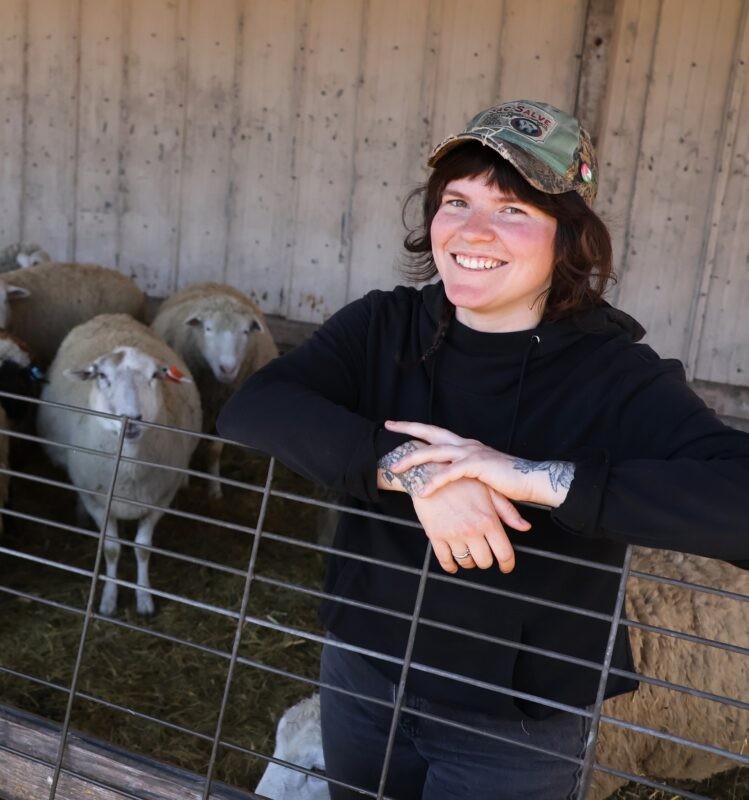
Frances Kelliher, 28, grew up in Minneapolis and got interested in farming and food while taking public health classes in college. She says a life-changing experience was reading What Does Justice Look Like? In that book, Wahpetunwan Dakota scholar and activist Waziyatawin of Pezihutazizi Otunwe describes the generations of genocide and broken treaties that have marked the relationship between Indigenous people in the region, white settlers, and the government. The book struck home for Kelliher, given that her family had long farmed in the Minnesota River Valley near Mankato, where, in 1862, 38 Dakota men were hung in the largest mass execution in history.
The Anderson family farm, which was a dairy at one time, sits on the bottom of a steeply sloping dead-end road, just across a tree line from the Minnesota River. The farm also borders Minneopa State Park (a mill in the park was built by a great, great, great grandfather of Kelliher’s).
THE BELLY OF THE VALLEY
Frances refers to the 46 acres that remain of the family land as the “belly of the valley.” Such a location makes for a scenic setting, but comes with downsides. The Minnesota River flows through one of the most intensely cropped regions in the country and has long suffered from erosion and agrichemical runoff.
At one point Kelliher’s mother, who grew up on the farm, was diagnosed with breast cancer without genetic markers. Then a cousin who grew up in the area got the same diagnosis. Kelliher wondered: was there a connection between the farming methods that dominate the watershed and the cancers? She started thinking a lot about abuse of the land and of the people, and the connections to environmental and human health. She admits to spending a lot of time feeling shame and guilt, and overwhelmed about what to do.
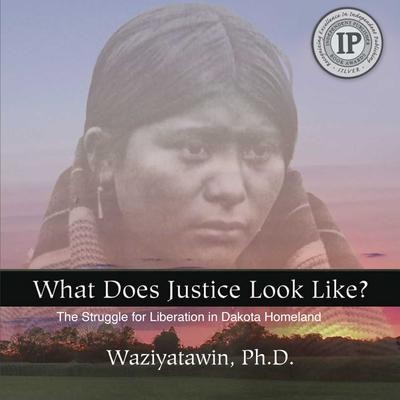 “In What Does Justice Look Like? Waziyatawin talks about land back to Indigenous people on the part of the state and institutions, but she also talks about settler responsibility to heal land,” recalls Kelliher. “And one of the things that really stuck with me was settlers’ responsibility to heal land and not just give land back and wash your hands and be free of the guilt and the shame and the damage. But how do we actively move toward building relationship with land, healing the damage that we’ve done?”
But how do we actively move toward building relationship with land, healing the damage that we’ve done?
Kelliher had always been a self-described “animal person,” and was fascinated with the role regenerative grazing could play in rebuilding soil health and reclaiming natural grassland habitats. After college, she learned as much as she could about rotationally grazing sheep by working on farms and networking with mentors such as Hannah Bernhardt, a veteran grazier in northeastern Minnesota. She also worked for a time with Josie Trople and Arlo Hark, whose Cannon Valley Graziers enterprise has carved out a business niche using rotational grazing of sheep to control vegetation beneath solar arrays in the region.
ENTREPRENEURIAL FARMER
Kelliher is interested in cooperative farming models and has long felt she wouldn’t want to own her own farming operation in order to produce food and fiber. But about the time the grazier’s experience with cooperative farming didn’t go as planned, her grandmother, Elaine Anderson, died, and the family invited Kelliher to use Anderson’s farm near the Minnesota River as a home base for her operation.
It was starting to look like being an entrepreneurial farmer could perhaps be in the cards for Frances after all. And to do that, she realized she would need some background in financial management. Kelliher says she benefited immensely from time she spent working on Little Big Sky Farm in Henderson, Minn., where the owners regularly opened up their books and allowed her to take a look at what it takes financially to run an agricultural operation.
“That experience helped me realize if I was going to do this as my own business, I needed financial planning training,” the beginning farmer recalls.
RETURNING HOOVES TO THE LAND
Almost a year to the day since Kelliher brought livestock back to a farm that hadn’t seen domesticated hooves in some three decades, she walks past a former dairy barn and silo to inspect a low-lying meadow between a railroad track and the river. The farmer reflects on the past year and lets herself dream a little bit about the future.
In 2025, she sold out the grass-fed meat her Riverbed Lamb enterprise produces, and she’d like to expand her flock of 20 ewes to meet the demand.
“I think sometimes I get a little, ‘Oh, marketing, whatever. I don’t like doing that part.’ But I actually do like the customer connection part of all this,” Kelliher concedes. “Getting pictures throughout the year of what people have cooked and getting to be part of people’s lives is a really joyful part of this work. I’m so excited to get more lamb to more people this year.”
Thank you to the Land Stewardship Project for letting us run an abbreviated version of this article. To reach the longer version, go to: https://landstewardshipproject.org/the-belly-of-belief/